About
Where Do We Come From?
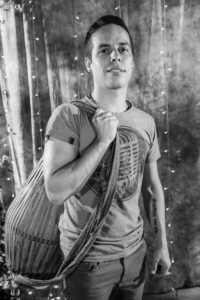
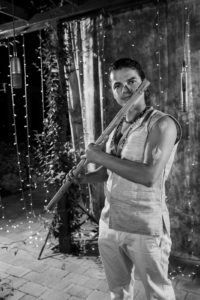
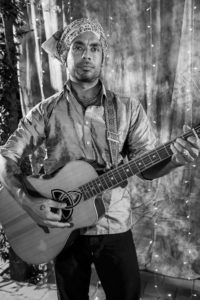
Is it an esoteric question? Externally we as the Mayapuris are the product of our upbringing. Vish has an Indian father and an Italian-American mother, Kishor and I (Bali) are brothers, one year apart, born from Colombian parents and Jagi is Venezuelan with Israeli descent. We grew up in temples, on farms, in villages, in cities surrounded by Krsna culture, playing mrdanga, singing, dancing, revelling in the joy of kirtan from birth until now. This is where we come from.
Internally? That in itself is a whole other discussion. These vehicles of flesh, these bodies, our facilities for control, thought, and movement, these are all material. There is something deeper. There is some distinction within each and every one of us, some life force that mans this vessel, that is behind and beyond the temporary carriage that is our body, and the passing experiences that constitute our environment.
The soul.
We are not these bodies. We are the eternal spirit within. We are lost souls in a very big material world trying to find our way home. We have a consititutional position; that of self-realized beings in complete harmony with the divine, with the Supreme, with the Absolute Truth.
Intrigued?
Finding our way home, to our true selves is a process, a path fraught with obstacles, but there is a way. In this modern age of quarrel and hypocrisy the prescribed method of self-realization is kirtan. Through it we find Truth. Through it we find Peace.
Where do we come from? We come from a place where every word is a song, every step is a dance. We come from a paradise where the sound of kirtan can be heard from every direction at any hour. We come from the spiritual sky, each and every one of us, and we are just trying to get back.
Through kirtan.
- Bali
The Mridunga – Our Favorite Drum
If there wasn’t the Mrdunga, there would be no such thing as the Mayapuris. We feel that it’s the best drum in the whole universe, especially for kirtan. That is our happy bias. Today we play other instruments, like tabla, flute, harmonium, etc, but the mridunga was the first instrument each of us, the Mayapuris, learnt to play. Actually, my mother played mridunga often when she was pregnant with me, so I began to learn the rhythms from within the womb. The first mridunga I played was a nicely decorated Quaker Oatmeal box, with a strap attached to it. Kish practiced on a wooden block for years, because his little arms couldn’t reach both sides of the mridunga. In fact, Kish’s dad remembers him playing on one side, ti ti ti, then crawling to the other side, ta ta ta.
There is a mridunga pranam mantra that I learnt from my teacher, Bablu Mashai, whom I studied under from the age of ten. We would chant this mantra before each class to offer respects. The mantra begins by offering respects to Caitanya Mahaprabhu, the founder of kirtan, who also invented the mridunga five-hundred years ago. Earlier they played big heavy wooden drums. Instead, the mridunga makers used the clay from the nearby banks of the Ganga to create a light-weight drum. “Mrid” means clay and “anga” is body, so literally clay-body. It’s the primary instrument in Gaudiya Vaishnava kirtan, the kirtan of Western India, the style that our music is rooted in. Bhaktivinode Thakur, a scholar and poet from the Gaudiya tradition, says, “When I hear the sounds of the mridunga, all my worries, all my problems and sorrows fly away like crows at the sound of thunder, and my heart dances in ecstasy.”
Another interesting point of the mridunga is the range from the small, high side to the larger, low side. There is a symbolism inherent here as well; the sweet sound of the high side represents the feminine energy, or Radhe, and the low, bass side is the masculine energy, Shyam. Practically speaking, it’s a very dynamic drum. It can be played very softly and sweetly with lots of intricacies, and also very loudly with full vigor and passion. You can sit with it, dance with it, walk, and twirl with it. It’s the heart-beat of the kirtan.
- Vishvambhar